

Key takeaways on how to increase Salesforce adoption from our S&OP webinar
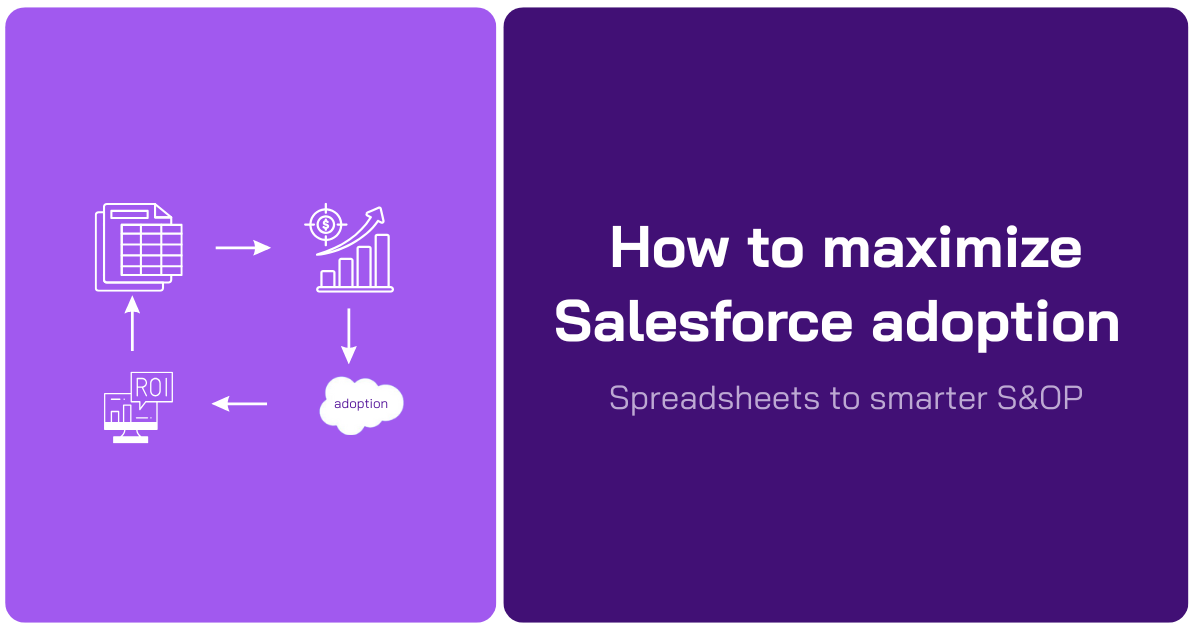
"Salesforce is powerful, but adoption often stalls when users revert to tools they know — spreadsheets. To drive real impact, we need to make complex processes simple and intuitive for every user."
Jerret Kasper, VP of Sales, Valorx
Salesforce has reported that only 37% of global teams fully embrace their CRM.
In other words, when you nail the Salesforce adoption process, you’re not just maximizing your investment — you’re unlocking the full potential of Salesforce to drive sales, streamline workflows, and enhance customer interactions.
Yet for many manufacturers, especially those managing complex S&OP processes, adoption remains elusive. Why? Because users still default to spreadsheets.
In this webinar recap, Anandhi Narayanan, Strategy and Transformation Manufacturing SME at TELUS Digital, and Jerret Kasper, VP of Sales at Valorx, break down how global manufacturers are overcoming this challenge — and what practical strategies are working.
#1 - Where is the S&OP adoption gap? Why is Salesforce alone not enough?
Manufacturers are under pressure to align sales, operations, and finance. Many invest heavily in Salesforce Manufacturing Cloud, expecting a seamless, digital S&OP process. But adoption often stalls.
Here's what Jerret Kasper, VP of Sales at Valorx, has to add...
Anandhi's thoughts mirrored Jerret's...
"If you don’t connect the sales process to operations in a digital way, then you again pivot to spreadsheets as your way of gathering the inputs from the various players to support your S&OP process."
Anandhi Narayanan, Strategy and Transformation Manufacturing SME, TELUS Digital
The culprit? Spreadsheets feel faster, more flexible, and easier to model in real-time. That familiarity wins, even when it creates version control issues, data fragmentation, and swivel-chair workflows.
#2 - How do you bridge this gap? Bring spreadsheet speed inside Salesforce
Anandhi and Jerret shared how they help leading manufacturers drive Salesforce adoption—not by replacing Excel, but by replicating its speed, flexibility, and interface within the platform.
"Adoption starts with using the platform for what it's best at — and then making the experience intuitive. If users can see all their data in one place and update it quickly, they’ll actually use it."
Jerret Kasper, VP of Sales, Valorx
See this in action...
Anandhi added a sharp perspective:
"We all know how fast demand is moving. We need to empower decision-makers across the value chain with real-time insight."
Anandhi Narayanan, Strategy and Transformation Manufacturing SME, TELUS Digital
To illustrate this, Anandhi and Jerret walked through a compelling example from a global manufacturer managing complex demand forecasting.
#3 - Here's how Qualcomm saved 17,000+ hours and transformed forecasting
Despite having tens of thousands of Salesforce licenses, Qualcomm faced a familiar challenge: poor adoption for the design pipeline and chipset forecasting. Users defaulted to offline spreadsheets, leading to fragmented data, manual effort, and slow updates.
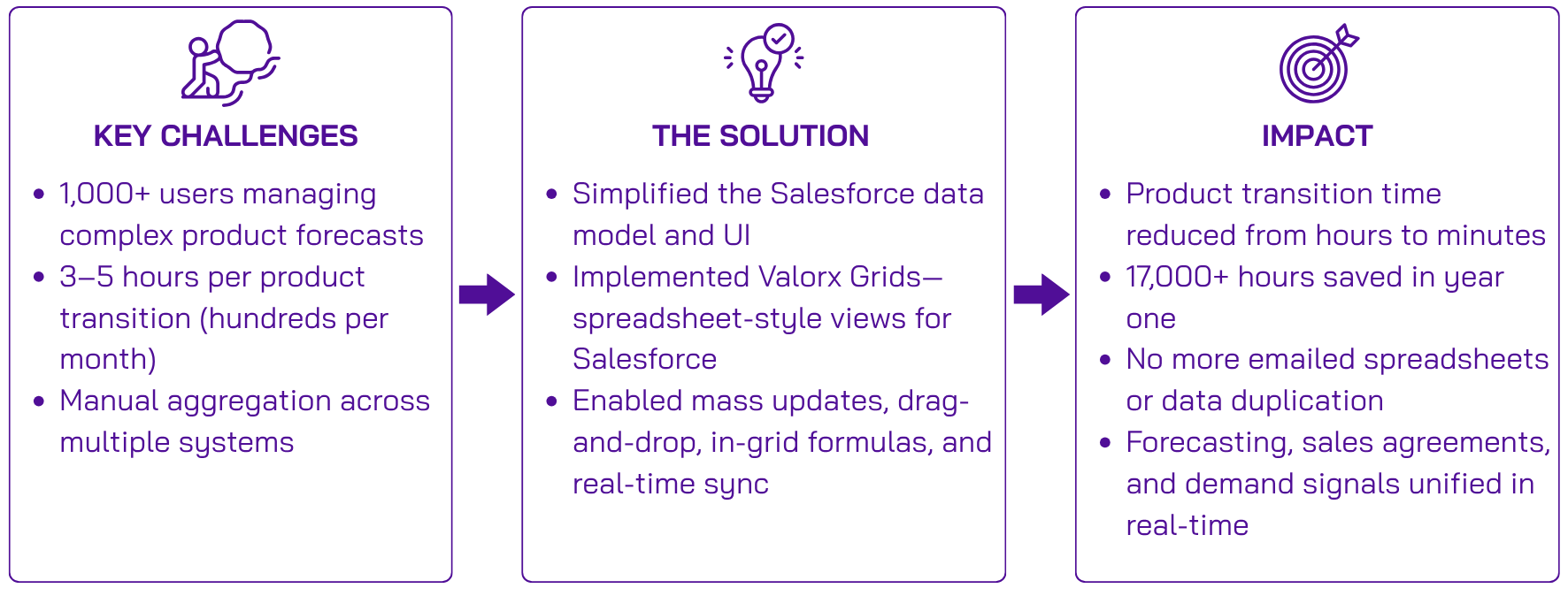
You can read the entire case study right here.
Also, have a listen to how accurately Jerret demonstrated this entire process:
#4 - Why platforms need to tailor UX by role?
Both Anandhi and Jerret emphasized that sellers, planners, and finance teams view the same data differently. Why do teams resist adopting Salesforce? Because the platform forces them into a one-size-fits-all UI that slows them down.
Jerret clearly stated that every user wants to visualize the data slightly differently. The question remains: how do you build a UI that everybody's happy with? The answer is you really can't. Let's listen in...
To this, Anandhi acknowledged...
"Now I want to maybe see a point of view that says aggregate all the products. I don’t really care about the customer... I just care about my products because I’ve got to demand plan."
Anandhi Narayanan, Strategy and Transformation Manufacturing SME, TELUS Digital
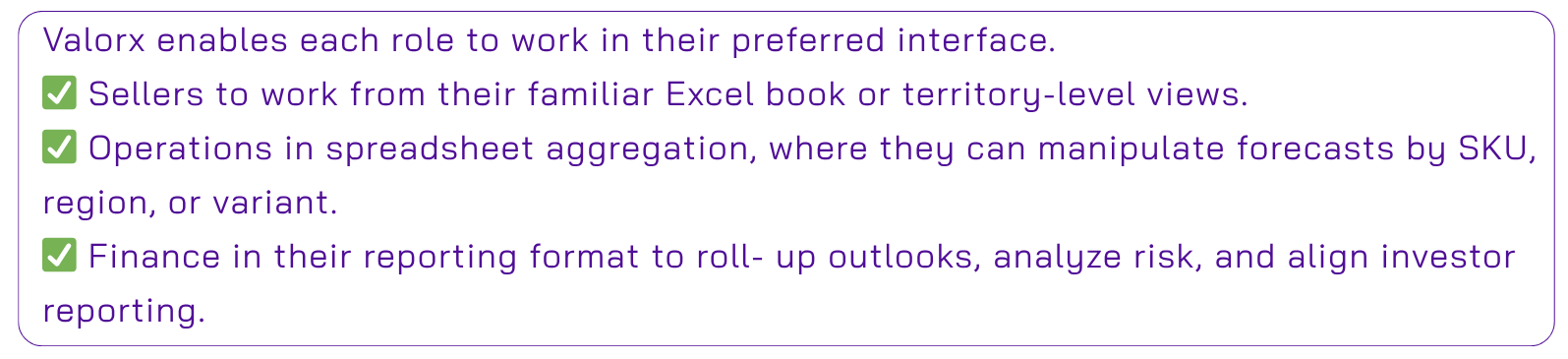
Key takeaways to drive S&OP Salesforce adoption
1️⃣ Focus on user experience, not enforcement - by making Salesforce feel like a spreadsheet-simple workspace your teams enjoy using, working in Salesforce doesn’t feel like “extra work.” The more intuitive it feels, the faster adoption grows.
2️⃣ Tailor to personas. Sellers, ops, and finance need different views and functions.
3️⃣ Simplify first, then scale. Start with quick wins to build momentum.
4️⃣ Embed in business rhythm. Integrate with reviews, planning cycles, and forecast cadences.
5️⃣ Unify sales, operations, and finance signals. A true S&OP platform connects all inputs.
Final thought: S&OP is a strategic lever, not just a workflow
Anandhi closed with a powerful point:
"This isn’t just about digitization. It’s about aligning planning to market shifts. That’s the difference between reacting and leading."
Anandhi Narayanan, Strategy and Transformation Manufacturing SME, TELUS Digital
Want to bring spreadsheet speed to your Salesforce S&OP? We’re hosting personalized Lunch & Learn sessions to explore your use case. Whether you’re stuck in spreadsheets or struggling with Salesforce adoption, we’ll show you what’s possible.
